In our last article we discussed the value of using real-time analytics to make confident estate decisions. Today, we look closer at how space utilisation analytics and occupancy data help estate teams plan, design, and optimise their properties to control costs, increase efficiency, and improve daily user experience.
Occupancy vs. Space utilisation: what is the difference?
To get the most from your building data, it helps to understand two primary building performance KPIs: occupancy and space utilisation. While the two terms are often used interchangeably, they measure distinct patterns.
- Occupancy counts the exact number of people detected in a selected space at a given time.
- Space utilisation measures how effectively that space is being used in relation to its total capacity (occupancy divided by capacity).
For example, a 200-seat lecture theatre with 40 students means the space is 20% utilised during the time period.
We recommend tracking and analysing both metrics together to spot actionable patterns. Take building-level data for example, occupancy data shows you the number of building visitors, while the space utilisation data shows you how the building is being used by those visitors compared to how full it should be. This combination helps you analyse data across different scenarios to meet your needs.
Table: key differences between occupancy and space utilisation
Metric | Occupancy | Space Utilisation |
What it measures | The number of people detected in a selected space. | Occupancy divided by capacity |
What it tells you | • Actual occupancy versus planned occupancy. • Popular buildings and zones across a campus. • High-traffic areas over time. | • Actual utilisation versus planned utilisation. • Over-used and under-used spaces. • Asset efficiency. |
Six ways space utilisation analytics support estate management
Here is how forward-looking estate teams use space utilisation and occupancy data as supporting evidence to develop operational strategies:
1. Right-size portfolios and estates
Space utilisation analytics replace guesswork with accurate data, exposing the gap between actual space needs and perceived shortages. Instead of funding expensive new construction, estate leaders use these insights to confidently close or consolidate under-utilised buildings. Optimising the assets you already own protects your capital budget and significantly cuts property overheads.
2. Support demand-based energy controls
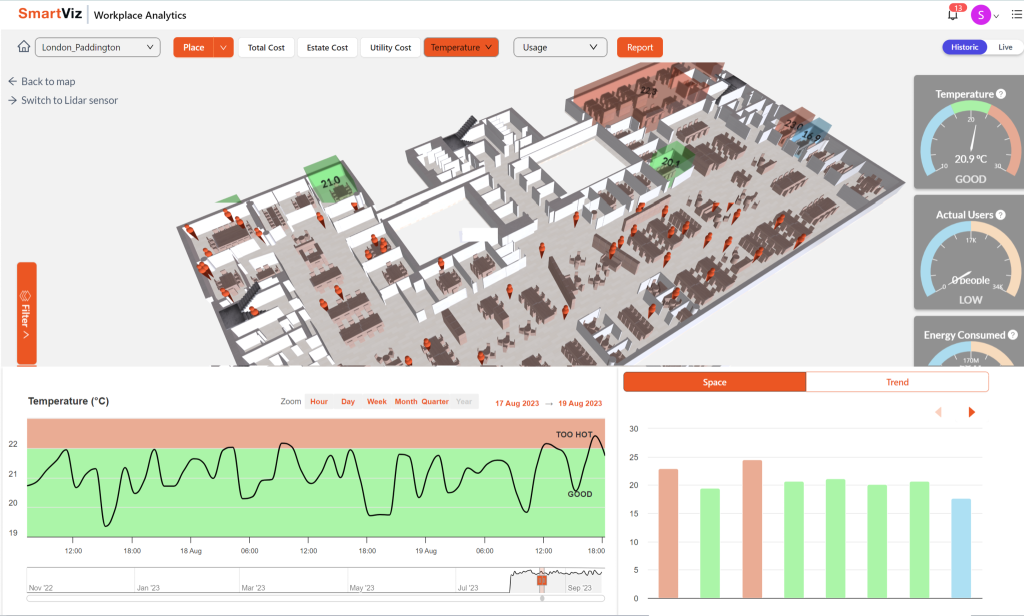
Linking occupancy data to your building management systems eliminates utility waste. Instead of running systems on rigid timers, your HVAC and lighting adjust dynamically to actual room use. This targeted control directly lowers unnecessary operational energy consumption while keeping your spaces comfortable.
3. Improve space planning and scheduling
Tracking usage patterns aligns daily operations with actual demand. This data helps you implement practical, localised changes, such as optimising schedules to fix perceived room shortages. Identifying low-utilisation zones also gives you the clear evidence needed to close specific areas or buildings during weekends and quiet periods, directly lowering energy and maintenance costs.
4. Develop people-centric space designs
Space utilisation analytics show exactly where people naturally gather, providing the evidence you need for layout design. The data helps you confidently add collaborative zones and repurpose under-used areas around true user needs. Additionally, tracking peak occupancy catches over-crowded zones before they impact wellbeing. This allows you to improve ventilation, cleaning, and maintenance exactly where your occupants need it most.
5. Manage complex renovations without disruption
Historic utilisation and occupancy patterns take the guesswork out of estate refurbishments. Instead of disrupting daily operations, you use past data to accurately map out temporary space requirements before construction begins. This allows you to deliver essential building upgrades while fully protecting academic schedules and the student experience.
6. Inform capital projects and redevelopments
Data-driven estate management ensures you base future property acquisitions or construction projects on historical usage trends rather than assumptions. Having clear visibility into your estate capacity prevents over-spending on unnecessary expansions and keeps capital deployment efficient.
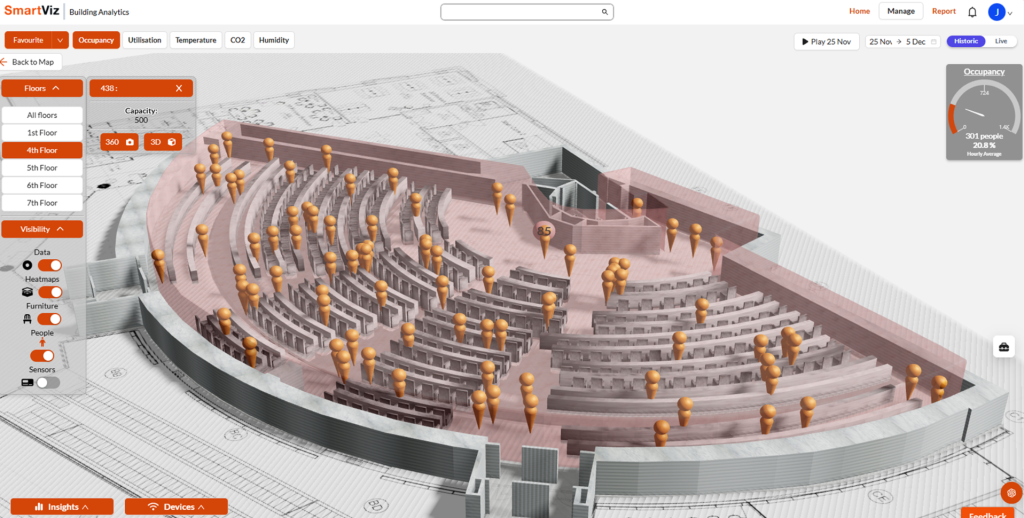
Real-world impact: smart space planning in action
Data-driven estate management delivers measurable financial and operational returns. Here is how our clients use real-time building analytics to manage their portfolios:
Workplace: Vodafone
Vodafone uses SmartViz platform to monitor assets, personnel footprint, and space usage patterns across its global portfolio of over 3,000 offices, call centres, retail stores, and data centres, saving multi-millions of dollars per annum.
Campus: Cardiff Metropolitan University
Cardiff Met identified the gap between actual space needs and perceived shortages with actionable insights from space usage, occupancy, and air quality data analytics. It helps the university save £5.1m in capital costs, £102k in operational costs, and £40k in energy costs per annum.
Next steps: take control of your estate data
Optimising an estate requires breaking down data silos. SmartViz connects and visualises data from your existing systems and IoT sensors within an intuitive digital twin, giving you the clarity needed to reduce costs, enhance productivity, and support user wellbeing.
Contact our team today to see how these insights can improve your property strategy.
Book a SmartViz demo here: https://www.smart-viz.com/contact/